

How lockdown, an absurdly enormous industrial building, 500,000 photographs, seven lost kilos, a
serious amount of stubbornness and several printing crises eventually turned into an independent
art and photography magazine.
serious amount of stubbornness and several printing crises eventually turned into an independent
art and photography magazine.
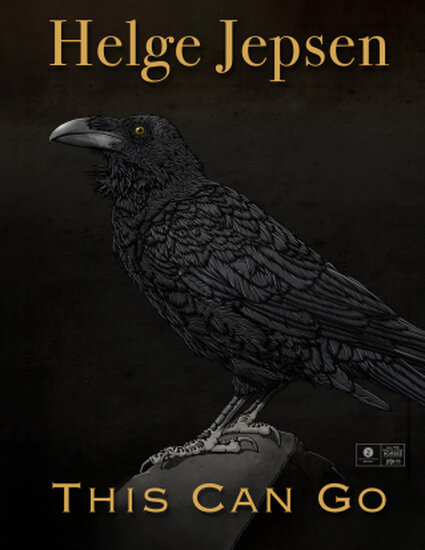
THE ART OF NOT BEING AN ARTIST
Helge Jepsen on black lines, difficult rims, beautiful cars, stoner rock, and the art of not wanting to be an artist.
“I am a service provider who can handle a pencil reasonably well.”
Helge Jepsen is an illustrator, communication designer, collector of cars on paper, and a declared non-artist. Born in Flensburg, he has lived and worked in Essen since the mid-eighties. For years, he drew automobiles for the Frankfurter Allgemeine Zeitung, illustrated books and magazines, portrayed the collections of passionate car lovers, and is one of the minds behind Dukes of Downtown, an Essen-based event for vehicles with character rather than mere status polish. And yet he says: “I am a service provider who can handle a pencil reasonably well.”
That may sound like understatement, but above all it is an attitude. Jepsen distrusts the label of artist whenever it becomes more important than the work itself. What interests him is craft, form, commission, and the daily joy of making something come into being. Sometimes it is a BMW 507, sometimes the twentieth Mazda. The standard remains the same. Only when the light and the cast shadow are right is the image finished. Then it may go on the wall. Or, as his exhibition is called: This Can Go.
THIS CAN GO
In German, the phrase usually asks whether something is art or ready for the bin. Helge Jepsen turns it into a verdict of completion: the work is finished, released, and ready to leave the studio. The line is drawn. The shadow sits. Now it can find its place.
Helge Jepsen on black lines, difficult rims, beautiful cars, stoner rock, and the art of not wanting to be an artist.
“I am a service provider who can handle a pencil reasonably well.”
Helge Jepsen is an illustrator, communication designer, collector of cars on paper, and a declared non-artist. Born in Flensburg, he has lived and worked in Essen since the mid-eighties. For years, he drew automobiles for the Frankfurter Allgemeine Zeitung, illustrated books and magazines, portrayed the collections of passionate car lovers, and is one of the minds behind Dukes of Downtown, an Essen-based event for vehicles with character rather than mere status polish. And yet he says: “I am a service provider who can handle a pencil reasonably well.”
That may sound like understatement, but above all it is an attitude. Jepsen distrusts the label of artist whenever it becomes more important than the work itself. What interests him is craft, form, commission, and the daily joy of making something come into being. Sometimes it is a BMW 507, sometimes the twentieth Mazda. The standard remains the same. Only when the light and the cast shadow are right is the image finished. Then it may go on the wall. Or, as his exhibition is called: This Can Go.
THIS CAN GO
In German, the phrase usually asks whether something is art or ready for the bin. Helge Jepsen turns it into a verdict of completion: the work is finished, released, and ready to leave the studio. The line is drawn. The shadow sits. Now it can find its place.
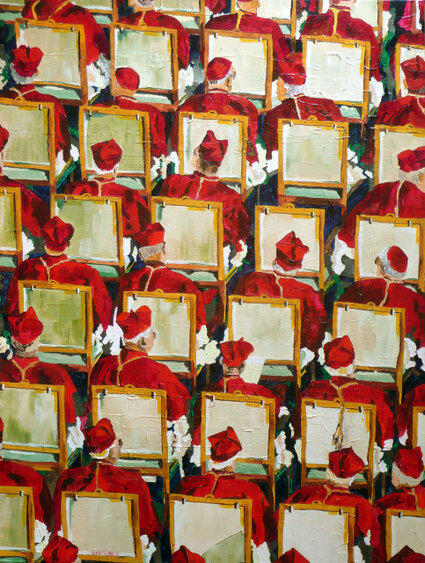
LISTENING TO PAINT
A conversation about old white men, splashing paint, painting as a foreign language, mistakes as proof of reality, music inside the image, and the freedom of not having to be in New York.
Volker Niehusmann is a concert musician and composer. For decades, he worked at the Folkwang University of the Arts, where he headed the guitar department for many years and took on all professorial responsibilities.
A conversation about old white men, splashing paint, painting as a foreign language, mistakes as proof of reality, music inside the image, and the freedom of not having to be in New York.
Volker Niehusmann is a concert musician and composer. For decades, he worked at the Folkwang University of the Arts, where he headed the guitar department for many years and took on all professorial responsibilities.
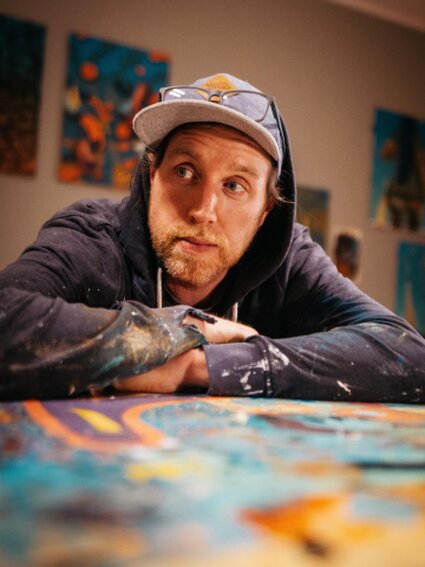
Leo Namislow does not think of art as a fixed discipline, but as a form of freedom in motion. His work is shaped by density, friction, mistakes, and the courage to follow what was never fully planned. In conversation with Être Rebelle, he speaks about detours, rebellion, social tensions, and why freedom, for him, is not only an attitude but also a method.

The Poetry of Surfaces, Beneath and Beyond
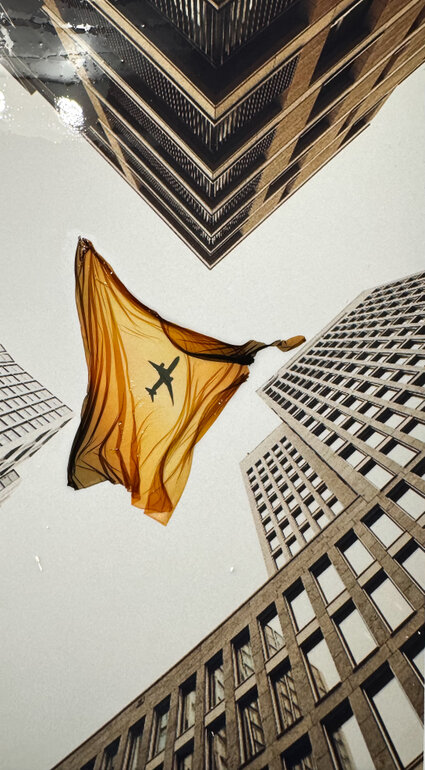
Polaroid Lifting and the Dialectics of Dream & Memory